
"noémi kiss spielt mit erwartungen und stoffen. sie macht naheliegende dinge, auf die noch keiner kam, weil in verschiedenen schubladen einsortiert war, was sie verbindet: hart und weich, spitz und stumpf, grob und fein - ihre arbeit als künstlerin beruht auf der unbefangenheit der architektin, die der wirklichkeit geradewegs begegnet, aber auch der befangenheit der philosophin, die sich aus dem gestrüpp der begriffe eine eigene wirklichkeit schafft. immer weckt ihre arbeit eine heiterkeit, die ins nachdenken des betrachters übergeht, nicht umgekehrt. die arbeit fällt ihr leicht, deshalb tut sie diese und keine andere."
(G. H. H.)
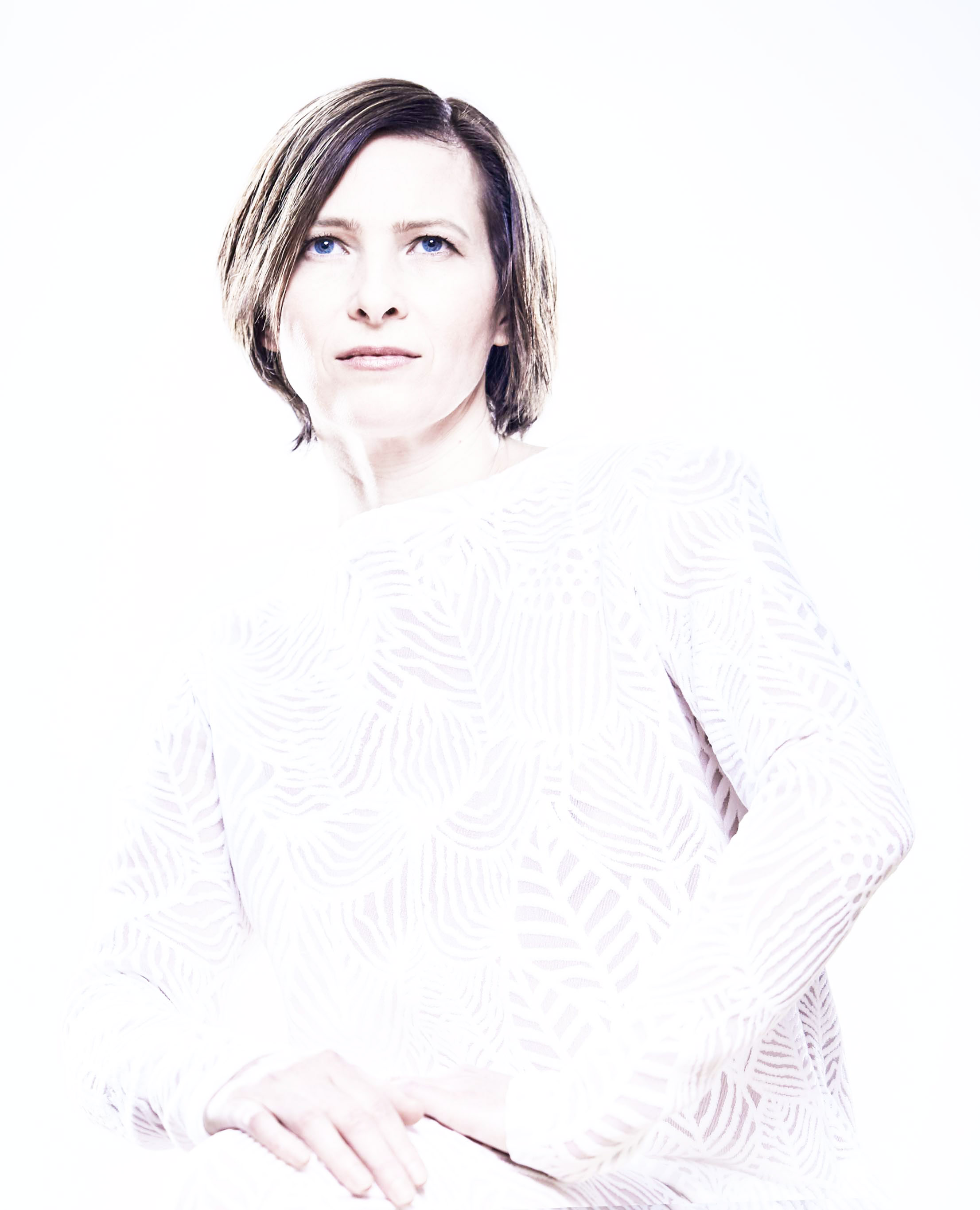
Die bildende Künstlerin, Architektin und Philosophin Noémi Kiss lebt und arbeitet in Österreich. Mit ihrer Arbeit erschafft sie scheinbar Naheliegendes, Alltägliches ist ihr willkommen: das Fehlerhafte, der Mangel, der dem Material innewohnt, das Missgeschick. Der Lapsus wird zum Design erhoben!
Indem sich ihr Schaffen eindeutig auf die spielerische und ‘leichtere‘ Seite des Lebens konzentriert, bestärkt sie uns in der Akzeptanz unserer eigenen vermeintlichen Mangelhaftigkeit. So wecken ihre Werke eine Heiterkeit, die in die Reflexion des Betrachters übergeht.
(Florian Schindler-Strauss)
The visual artist, architect and philosopher Noémi Kiss lives and works in Vienna. With her work she creates seemingly obvious, everday things as a welcome to the ‚faulty‘: the inherent lack within the material, the mishap. The ‚lapse‘ is raised to design!
By focusing clearly on the playful and ‚lighter‘ side of life, her work encourages us to accept our own supposed deficiency. Thus, her works arouse a cheerfulness that passes into the reflection of the beholder.
(trans. J. B.)
Foto Alexander Schleissing
Noémi Kiss is a visual artist, architect, and philosopher living in Austria. Born in 1969 in Székelykeresztúr (Transylvania, Romania), she earned a master’s degree in architecture from the Vienna University of Technology and a master’s degree in philosophy from the University of Human Sciences in Vienna.
Since 2013, she has worked freelance, exploring the interface between contemporary art, design, and architecture. In her material-based practice, she transforms everyday objects and familiar materials — particularly Persian carpets, textiles, concrete, and industrial materials — into sculptural works that question perception, value, and cultural attributions. Her works move between concept and sensory experience, opening new perspectives on materiality, memory, and form.
From 2011 to 2013, she collaborated with architect Andreas Reichl under the name KISSTHEREICHL, working on the internationally acclaimed series Carpeted Carpets, among other projects.
Her works have been presented nationally and internationally in exhibitions and art/design contexts, including Ausstellungshaus Spoerri (Austria), ZONAMACO / Design Mexico City, Museum Villa Rot (Germany), and Kunsthalle Gießen (Germany), as well as numerous exhibitions throughout Austria and Europe.
Textiles, Space & Perception
The existence of atmospheres and moods as an everyday phenomenon is immediately accessible and directly comprehensible to everyone. Yet, as undeniable and present as an atmosphere may be, paradoxically it remains elusive: when we attempt to analyse it from a scientific perspective, it defies objectification and is difficult to capture in words. All the more strongly, it manifests itself in one’s own state of mind. Its effect can only be “measured” by the individual who clearly feels and senses it. It is the intangible extra that moves us. Quality is attributed to that intimate effect on the beholder — the one who is emotionally touched, in an ‘affective state of mind’, triggering a chain of associations.
The imagined values expressed in poetic images, which are so important to us, are essentially holistic, atmospheric images. Memories triggered by familiar sensory impressions also arise as moods — here, place is linked to sensation. Memory organises experiences according to their emotional ‘importance’. All memories of personal experiences “live” in atmospheric images and “reside” in places. Situations in any discipline — be it film, architecture or art — that move us are created through dynamic processes of change, such as the unexpected, the indeterminate, the uncontrollable and the staged. The heart and soul of every human being are full of longing for unexpected twists and turns. And if something does not feel right yet, then it is not over yet…
When it comes to carpets, I work with finished pieces; the carpet is an organic structure. A characteristic never exists on its own, but always requires a counterpart in order to be comprehensible. Perception is relational: the large becomes apparent in comparison to the small; the fragile in relation to the indestructible; the shiny in contrast to the matt; the smooth as opposed to the rough. The essence of things is constituted by opposites, as is the case with the interplay between dimensions. Here, too, difference marks an otherness. Since I work on a flat surface, my goal is to reveal the two-dimensional pattern of the carpet. By imposing three-dimensionality on the flat carpet, I reveal its original nature. Spatial order is appreciated and emphasised as a necessary point of comparison. The carpet remains a carpet, but its expression changes.
The same can be said of the subjective, mostly unconscious life experience of the individual. Without disruptions — such as mistakes, failures, misfortunes or strokes of fate — the fundamental principles according to which we act unconsciously remain largely invisible. Undamaged patterns of functioning remain hidden; only through damage and impairment does their structure emerge and healing can take place. Mistakes give rise to something new — this is not about repetition, but about insight through difference.
Through childhood experience, we learn to associate specific material properties with the characteristics of every material we know. We are firmly convinced these are not interchangeable: stone is hard, glass is fragile and textiles are soft. I “dress” materials with properties that are foreign to them. This contradicts their appearance and has the potential to irritate. The irritation attracts attention and draws our gaze. Materials of contrasting origins, brought together in an unorthodox combination, demand a new perspective on relationships and play with the viewer’s perception. With this method, for instance, a soft carpet becomes a hard, shiny, rounded object that breaks, melts or tears like paper. This invites immediate touch. What the eye promises, the hand must verify.
The raw material for my work is worn-out, discarded carpets ranging from rather inconspicuous to worthless — so the more worn or trampled a carpet is, the better. Beautiful and valuable carpets are already finished works, so my intervention is kept to a minimum out of respect for their value. As witnesses of the past, elaborately woven or hand-knotted carpets tell layered stories. Wear and tear slowly reveals their patina: an ever-changing state that cannot be intentionally created or copied, as it develops gradually over time.
Besides carpets — a central part of my work, with their many facets — I mainly use everyday materials: conventional building materials and banal objects, concrete, PU foam, or even natural materials such as human hair. I take objects that have become virtually invisible due to familiarity and remove them from their usual surroundings, placing them in a new light.
This unusual combination is also what transforms a traditional craft into a contemporary work of art. The reversal of characteristics fundamentally changes the behaviour of the objects, while the craft process itself becomes secondary. The sole aim is to achieve the desired effect. Without ‘deception’, there is no reaction from the audience. The artist presents the viewer with a staged illusion. The philosophy behind it serves to enchant — not to justify. Art here is not a commentary, but an act of transformation: the silent magic that occurs when perception shifts.
The ageing process and the careless destruction of textile artefacts represent a broad field of reflection for me. In addition to aesthetic and philosophical considerations, ecological and socio-political questions are also part of my artistic concept. Designed in new ways, these handicrafts — predominantly made by women — are given double value in many of my works: as ‘recycled art’, and as a tribute to female labour that is mostly underpaid or entirely unpaid. I make textiles tangible as a counterworld: soft cushions and duvets made of rough concrete; or unusual artificial fabrics that cover walls and invite touch, only to immediately disappoint the sense of touch. Through art, textiles become a powerful language.
In this way, I upgrade the lowest form of textile — usually discarded as cleaning rags — into a monument. A run is the poetry of the broken. Liquids, too, continuously changing form through movement, embody the transience and impermanence of things. As carrier and transporter, the carpet is used to preserve a selected, unstable form as an extended moment. / Noémi Kiss